A graphic that loses readability over time, a label that does not adhere properly, or an LED or display window that is not perfectly aligned with the underlying component. These are defects that become apparent on the finished equipment, but often originate from decisions made long before printing.
Here, we explain how we address these challenges and why, before preparing a quotation, we ask where the graphic overlay will be applied and under what conditions it will need to perform.
A request comes in with a PDF attached and just a few lines: 200 pieces, polyester, adhesive backing. Everything seems already defined and, in theory, all we would need to do is provide a price.
Usually, however, we ask a few questions first. What surface will the graphic overlay be applied to?
In what environment will the equipment operate?
What characteristics must it maintain over time?
Where will the label be applied?
These are simple questions, but they help us understand the actual application and identify the most suitable solution.
Graphic overlays, sometimes also referred to as membranes, labels or other similar terms, have a relatively simple construction compared with membrane keypads, but share many of the same design variables.
They are one of the components we regularly manufacture for electronic equipment, and we approach them using the same method we apply to a front panel, display frame or enclosure.
What a Graphic Overlay Needs to Do Once It Has Been Applied
The graphic file is certainly the most visible element, but it is not the only factor that determines the final result.
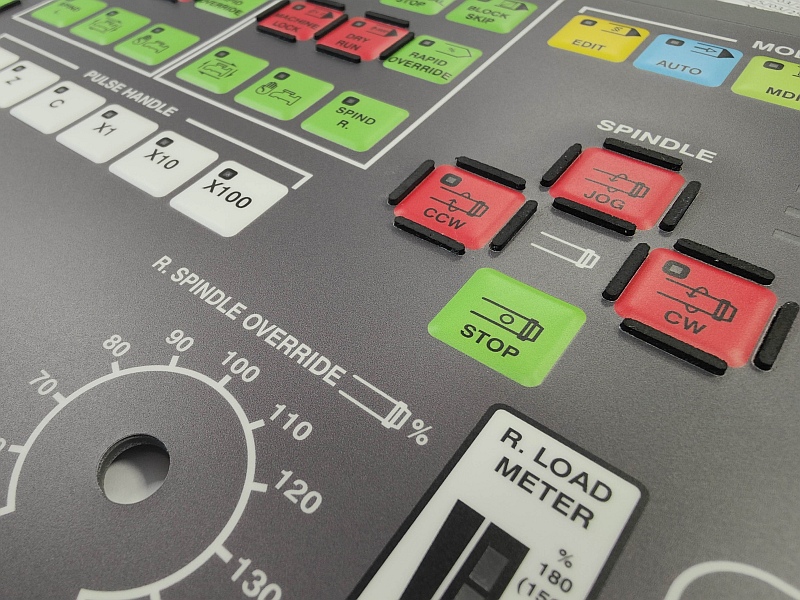
Graphic overlays can identify machine controls and operating statuses, incorporate transparent windows for LEDs and displays, include adhesive-free areas and, where required, embossed areas for keys. They can also include holes and openings and must correctly match the enclosure and the components underneath.
Depending on the application, the graphic overlay must also maintain its aesthetic, functional and adhesion characteristics over time.
For this reason, we do not consider it simply an adhesive graphic, but a component of the electronic equipment.
The Questions We Ask Before Preparing a Quotation
The equipment designer knows the application. We provide our experience in the selection and processing of materials, adhesive systems and printing processes.
That is why we want to know:
- where the graphic overlay will be installed and on what type of surface, including whether the surface is flat or curved;
- whether the surface is painted, liquid-painted or powder-coated, and whether it has a smooth or textured finish;
- what the environmental and operating conditions are, including temperature and indoor or outdoor use;
- whether there are display and/or LED areas, keys, holes or other elements with which the component must interface;
- the expected quantities and any possible variants.
There is no need to arrive with the material, thickness and adhesive already selected. If an approved specification already exists, we can of course follow it or suggest possible improvements. When the solution is still to be defined, we can work together with the customer to evaluate the most suitable construction.
It is worth noting that customers do not always report problems encountered with previous solutions. A label that fades, cracks or peels may sometimes be considered an unavoidable issue rather than a problem that can be addressed.
Materials, Finishes and Adhesives: We Start with the Application
Polyester and polycarbonate, different thicknesses and finishes, adhesive systems with different characteristics: there are many possible combinations, and there is no single solution that is best in every situation.
The choice depends on the application.
For this reason, a customer may ask us for a specific material or adhesive simply because it has been used in the past or is particularly familiar to them.
Before confirming the solution, however, we prefer to understand where the graphic overlays will be applied and the conditions in which they will operate.
The application surface, its finish, the environmental conditions and the expected stresses can all influence the choice.
Our goal is not to propose the most familiar material or adhesive, but to identify the solution that is best suited to the specific application.
The Problem Was Not the Label
Some time ago, a customer reported an adhesion problem with one of our supplies.
We were sure that the product and our manufacturing processes were compliant, so we investigated what was happening during application.
We discovered that the plastic part onto which the graphic overlays were being applied had been treated with a silicone spray, used to mask some imperfections from the moulding process.
The problem was therefore not caused by the label, but by the surface onto which it was being applied.
This example clearly explains why we insist on asking questions at the beginning of the process. Very often, the problem does not originate in the component itself, but in its interaction with the product onto which it is applied.
Screen Printing or Digital Printing? It Depends on the Project
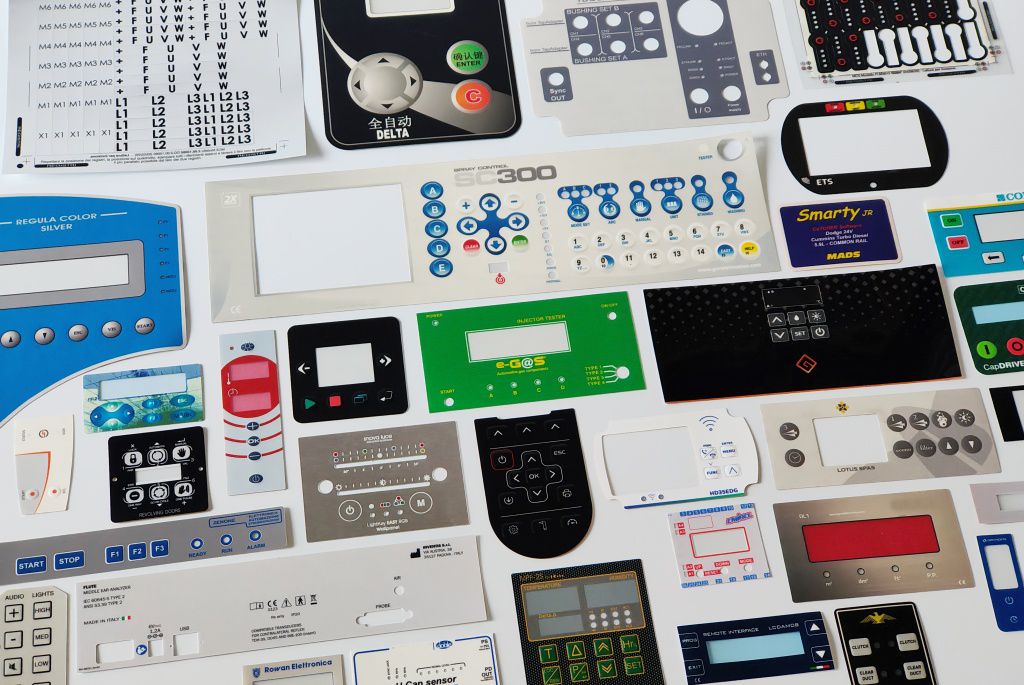
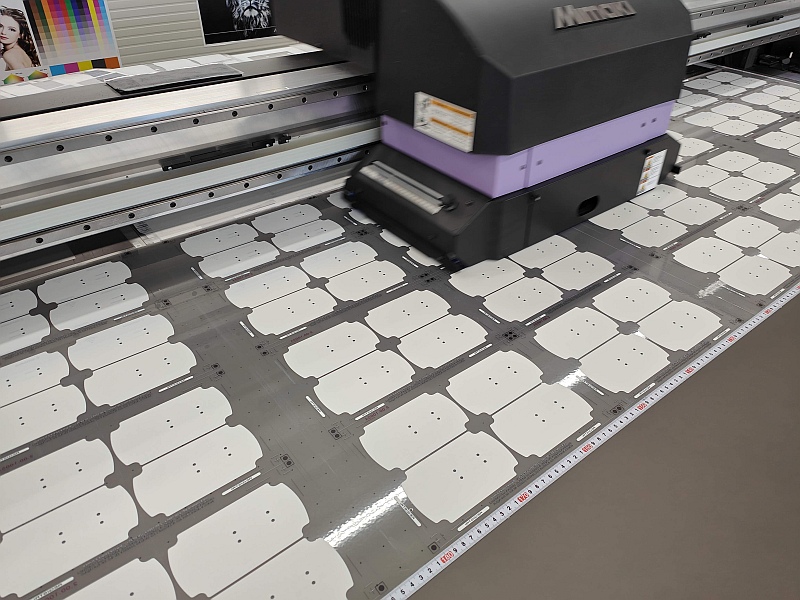
We have both screen printing and digital printing capabilities in-house, and we do not consider one technology inherently superior to the other.
For us, they are two equivalent processes, and we select the most efficient option according to the specific project.
The evaluation takes into account, among other factors, the quantities, the dimensions of the graphic overlays, the number of colours, the presence of gradients, the graphic complexity and the overall productivity of the process.
Digital printing can also be competitive for larger production runs, particularly when dealing with complex graphics, multiple colours or gradients, depending on the dimensions of the component.
Likewise, for medium to high-volume production, screen printing can be highly efficient even when multiple colours are required. It also allows us to achieve certain solutions, such as metallic colours, which are not available with our digital printing process.
We therefore do not choose the printing technology before understanding the project: we evaluate the project first and then select the most suitable process.
Second-Surface Printing, LED and Display Frames
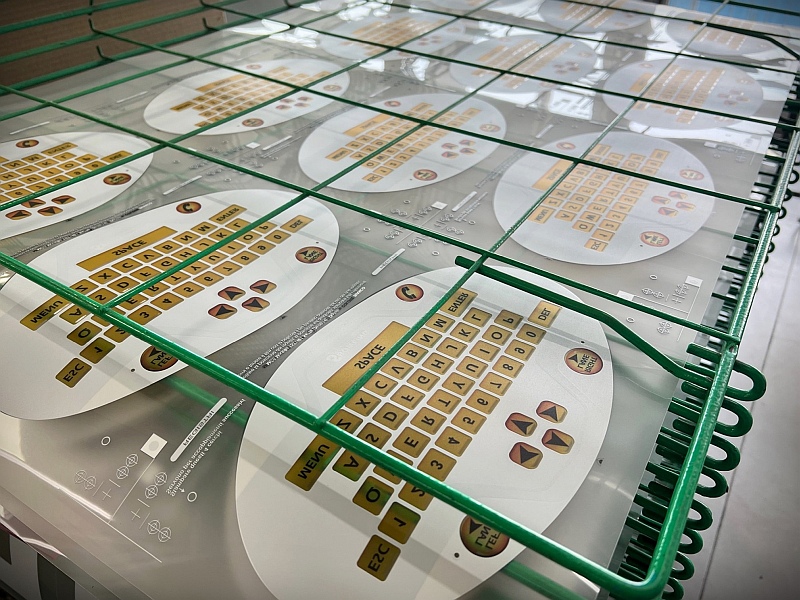
Graphic overlays are normally manufactured using transparent substrates, with the graphic printed on the second surface.
This keeps the printed graphic protected by the material itself.
It is also possible to leave transparent areas or create specific graphic solutions in correspondence with LEDs and displays.
These elements are also evaluated according to the equipment on which the graphic overlay will be installed.
When Precision Becomes Functional
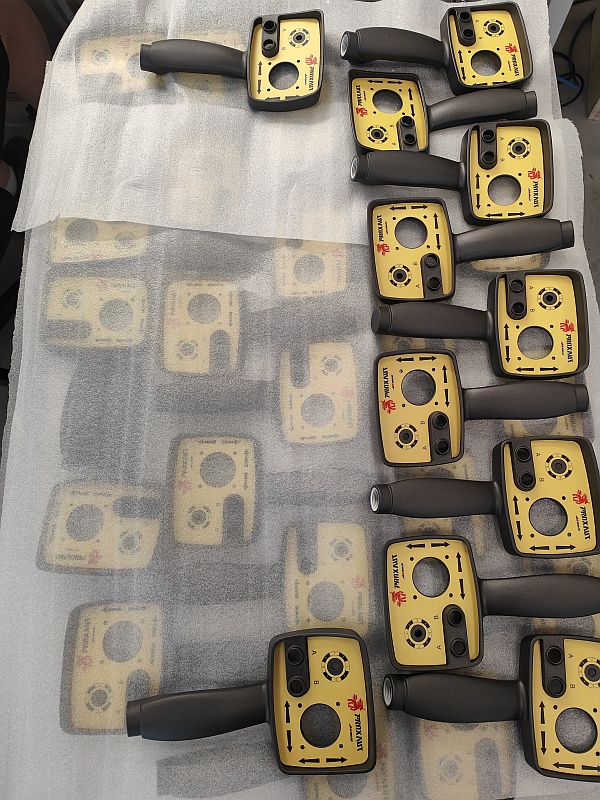
A graphic overlay can be a simple graphic element applied to a flat surface, or it can become an integral part of the equipment’s user interface.
When it has to align with LEDs, displays, keys, connectors or enclosure openings, dimensions and tolerances become functionally important.
For this reason, it is essential to understand the product onto which the overlay will be applied and to identify from the beginning which characteristics are actually critical to its function.
The Right Solution, Without Over-Specifying
Understanding the application also helps us avoid unnecessarily complex solutions.
Not all graphic overlays operate under the same conditions, and not all require materials, adhesives or processes with the same characteristics.
The objective is to use what the project actually requires, without adding specifications or performance characteristics that would provide no tangible benefit.
The Second Order, and the One After That
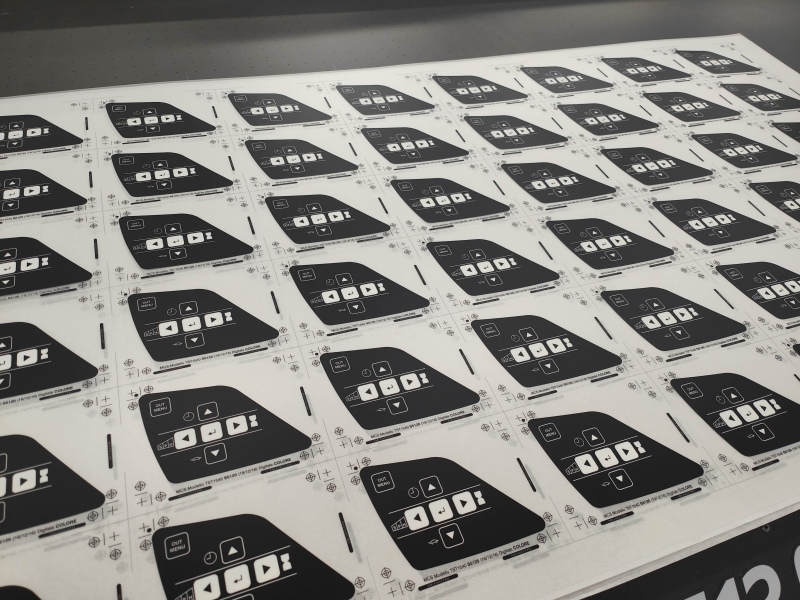
Many customers reorder the same component years after the original production.
At that point, the value is not simply in reproducing a graphic, but in being able to consistently reproduce a component that has already been approved.
This is why we also treat a graphic overlay as an industrial component, with a bill of materials, production instructions, revision management and the controls required by our Quality Management System.
For those using these labels to complete industrial equipment, this continuity can be far more valuable than the apparent simplicity of the component might suggest.
Graphic Overlays Are Part of Our Expertise Too
Customers who know us for the manufacture of membrane keypads, panels and customised enclosures may think that MCS is primarily a partner for more complex projects.
That is not the case.
Graphic overlays have always been part of our expertise, and we regularly manufacture them as standalone components as well. Some of our customers rely on MCS exclusively for this type of product.
You therefore do not need to have a complex project to work with MCS.
A graphic overlay is fully within our area of expertise. These are customised components designed for electronic equipment, and this is precisely why we can approach them with competence, a structured methodology and a clear understanding of their actual operating conditions.
A Few Pieces of Information Are Enough to Get Started
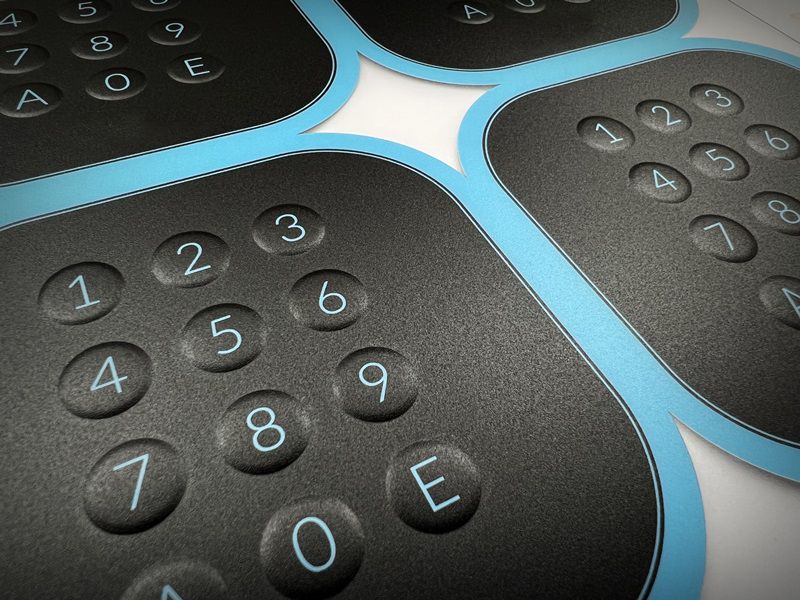
For an initial evaluation, all we need is a drawing or graphic file, the required quantity and some information about the application and operating conditions.
The material, adhesive, finish and printing technology do not necessarily need to be defined in advance.
The customer knows their equipment. We can help turn their requirements into a graphic overlay that is properly suited to the application.