Why, in this project, we chose a custom enclosure machined from solid aluminum, and when a commercial enclosure is actually the more sensible solution.
In this project, the enclosure was not intended simply to protect the electronics: it had to become an integral part of the product. The choice of materials was driven first and foremost by functional requirements, as the enclosure itself contributes to heat dissipation, mechanical robustness and the performance of the wireless communication system.
The requirements we started from
We did not begin with a customer drawing, but with a specific application requirement: an electronic device with very precise performance objectives.
- Heat dissipation generated by the internal electronic components;
- Proprietary product design;
- Medium-to-small production batches;
- Transparency to the signal of an internal Bluetooth antenna;
- Rugged-style aesthetic finish;
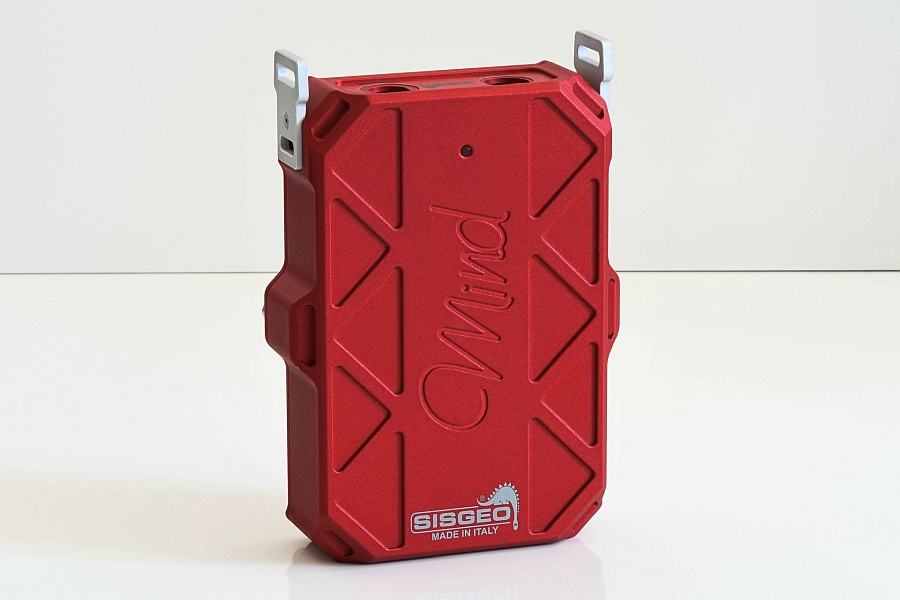
- Wearable configuration, with shoulder-strap attachment.
Taken together, these requirements could not be met by adapting an existing off-the-shelf enclosure. For this reason, we designed the enclosure around the application itself.
Why we chose solid aluminium machining
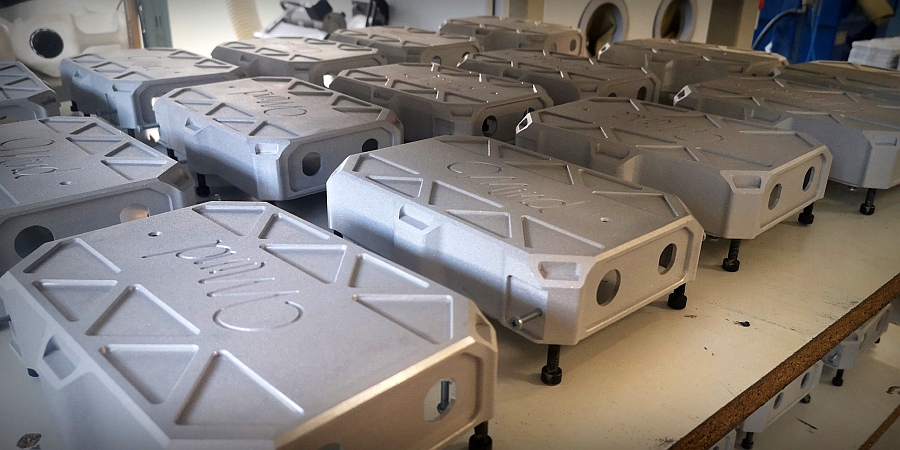
At the beginning of the project, we evaluated several alternatives. A commercial enclosure would have required too many compromises, while a fully plastic solution would not have provided the necessary thermal dissipation. This led us to choose an enclosure machined from solid aluminium.
There is also an economic reason behind this decision. When a fully customized design is required in medium-to-small production volumes, machining from solid material eliminates the initial investment in tooling. For metal enclosures, this would typically mean die casting, where tooling costs are justified only for high production volumes.
The Bluetooth challenge and how we solved it
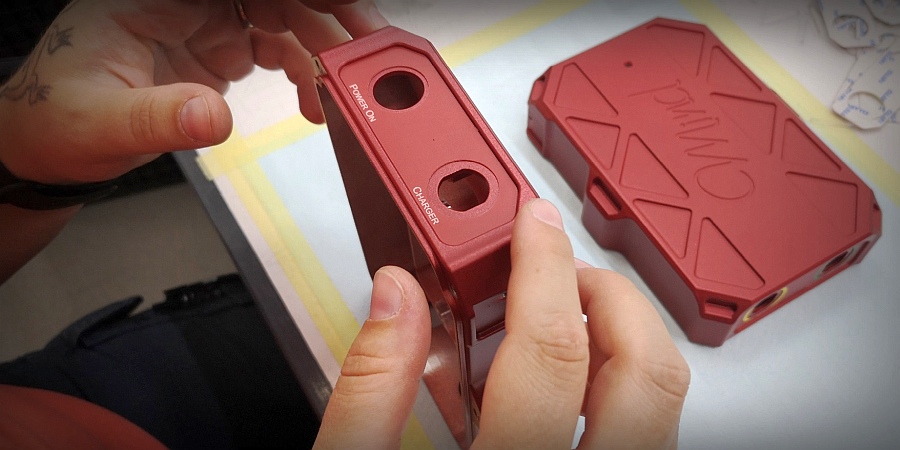
Aluminum has one important limitation: it shields radio signals. Since the electronic assembly incorporates an internal Bluetooth antenna, an entirely metallic enclosure would have significantly reduced communication performance.
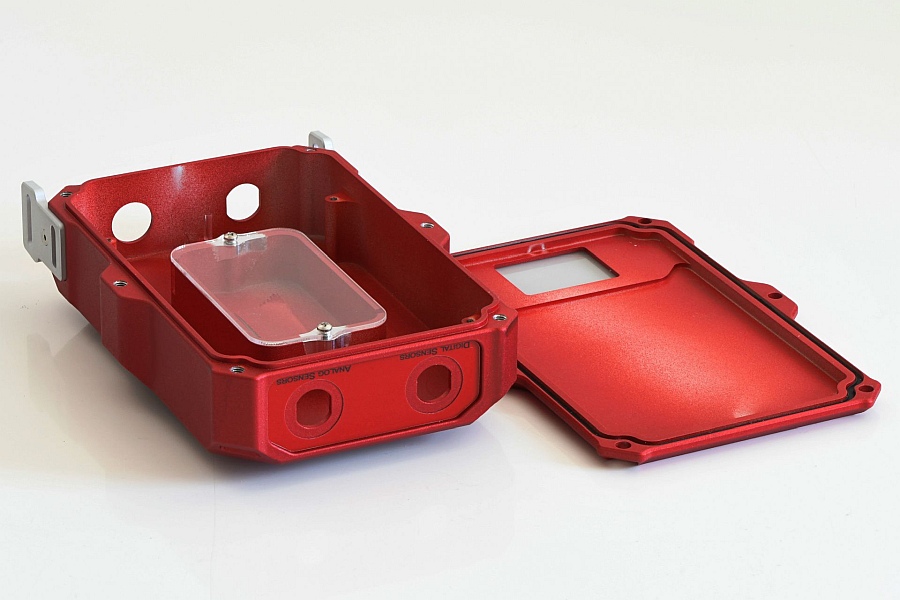
To solve this issue, we designed a plastic window positioned directly in front of the antenna. This allows the Bluetooth signal to pass freely while preserving the mechanical strength and thermal advantages of the aluminum structure. The concept is straightforward, but implementing it requires considering the electronic design before the mechanical design.
Achieving a uniform finish on two different materials
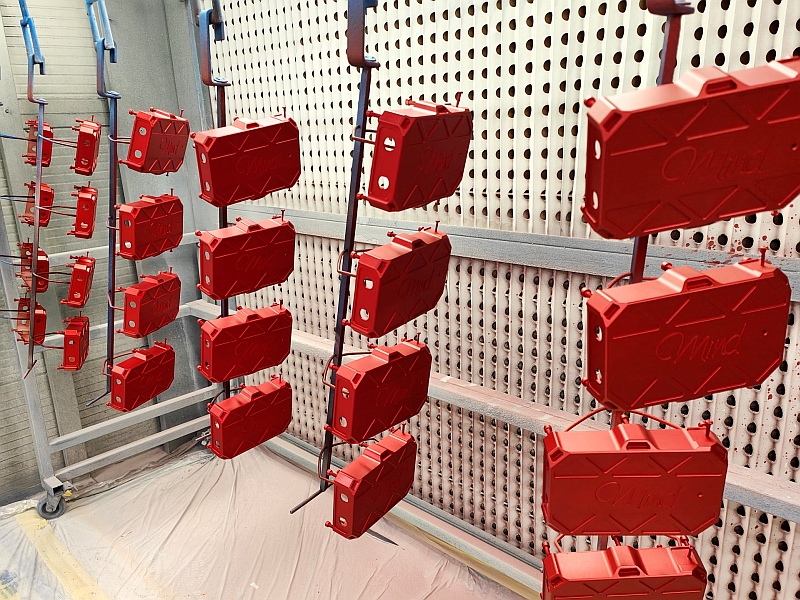
Combining aluminum and plastic introduces an aesthetic challenge: the two materials behave differently during the painting process.
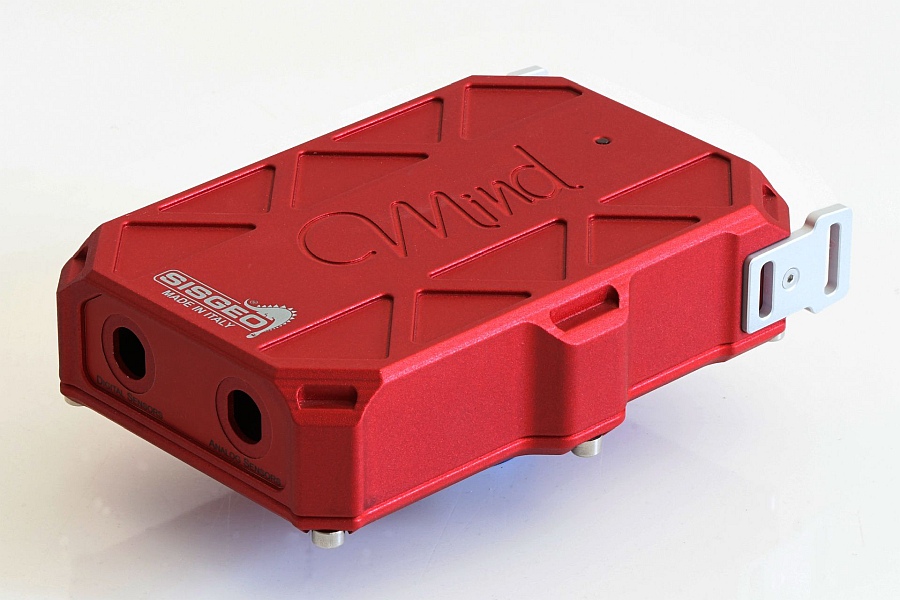
To obtain a homogeneous appearance, we selected liquid painting, which provides the same surface finish on both the aluminum and plastic components. Powder coating, although ideal for aluminum, would not have produced the same result on plastic. The finished enclosure therefore features a consistent, rugged-looking surface across both materials.
Reducing the number of suppliers also means reducing lead times, coordination effort and the possibility of errors.
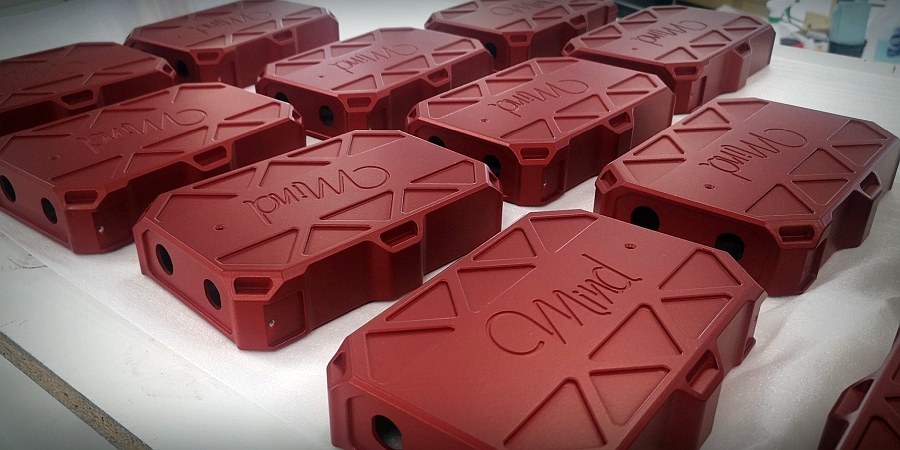
The real value of this project is reflected in what the customer ultimately receives: a complete enclosure, ready to be fitted with their electronic assembly. Within a single product, we integrated:
- Technical polyester label;
- Laser marking of the company logo;
- CNC-machined aluminum brackets and shoulder-strap attachment components;
- Integrated plastic parts;
- Uniform cosmetic finish.
The customer purchases a single semi-finished part from one supplier, minimizing the activities required before final assembly. There is no need to coordinate multiple suppliers for machining, finishing, labeling and laser marking: everything is already integrated into one complete component.
Behind this result lies an engineering process that combines thermal management, wireless signal transmission, material selection, surface finishing and manufacturability, always seeking the best balance between performance, aesthetics, cost and production time.
Custom or Commercial Enclosure? When Does Each Make Sense?
A custom enclosure is not always the right answer. The best choice depends on the specific application requirements. The following comparison highlights the three main approaches.
| Custom Machined from Solid Aluminum | Tooling (Die Casting or Injection Molding) | Customized Commercial Enclosure | |
| Initial investment | No dedicated tooling required | Tooling investment required | None |
| Design flexibility | Complete | Complete, but constrained by the tooling | Limited to the existing geometry |
| Production lead time | Fast | Longer, due to tooling development | Very fast if the enclosure is available from stock |
| Design changes | Easy and cost-effective | Expensive and time-consuming | Very limited |
| Thermal performance | Excellent, thanks to aluminum | Good with die casting, limited with plastic | Depends on the selected product |
| Electronics integration | Designed around the electronics | Designed around the electronics | Electronics are often adapted to fit the enclosure |
| Industrial design | Fully proprietary | Fully proprietary | Limited by the catalogue design |
| Ideal production volumes | From prototypes to a few hundred units per year | High production volumes | From individual units to small production runs |
| Future product evolution | Highly flexible | Complex | Limited |
| Recommended when | Small batches and proprietary design | High production volumes | A standard enclosure already satisfies the project requirements |
There is one final point we believe is important to state clearly. If a commercial enclosure already satisfies the functional, dimensional and aesthetic requirements of a project, it is almost always the best choice.
A custom enclosure becomes worthwhile only when it solves requirements that a standard product cannot meet.
We do not recommend a custom solution at any cost. We recommend it only when we believe it is the most effective engineering choice.
If you are developing an electronic device with requirements that go beyond the capabilities of a standard enclosure, we can help you identify the most appropriate solution even before the design phase begins. Let’s discuss your project.