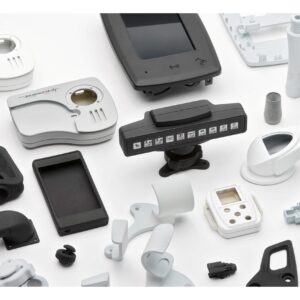
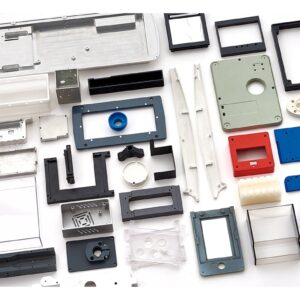
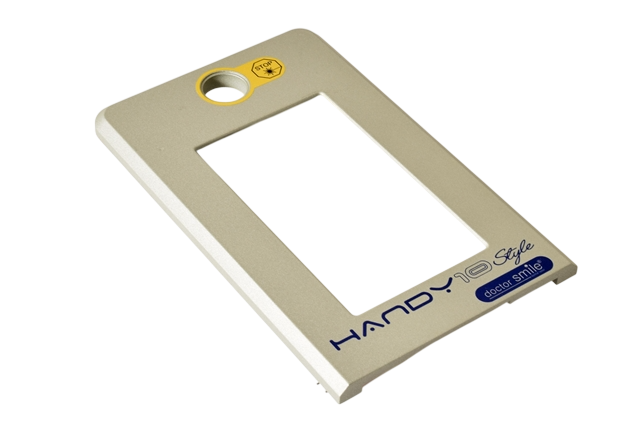
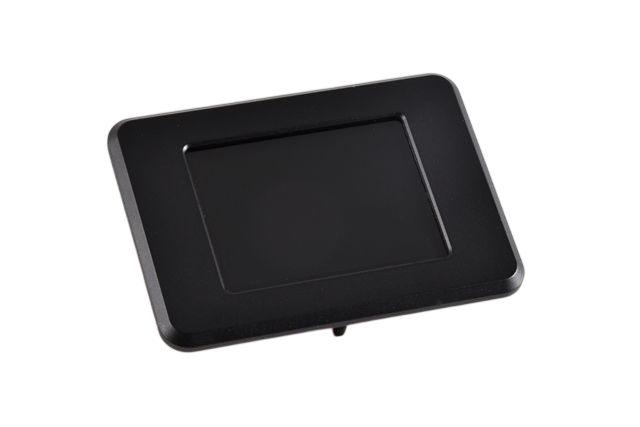
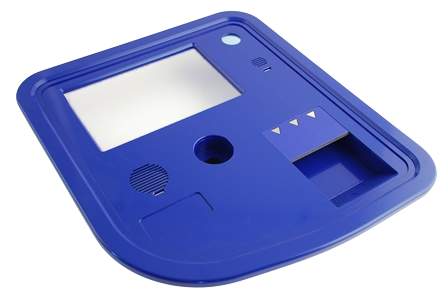
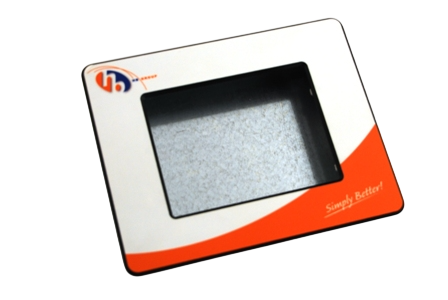
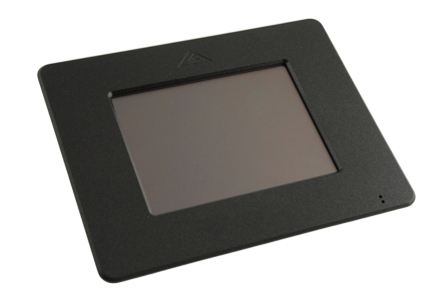
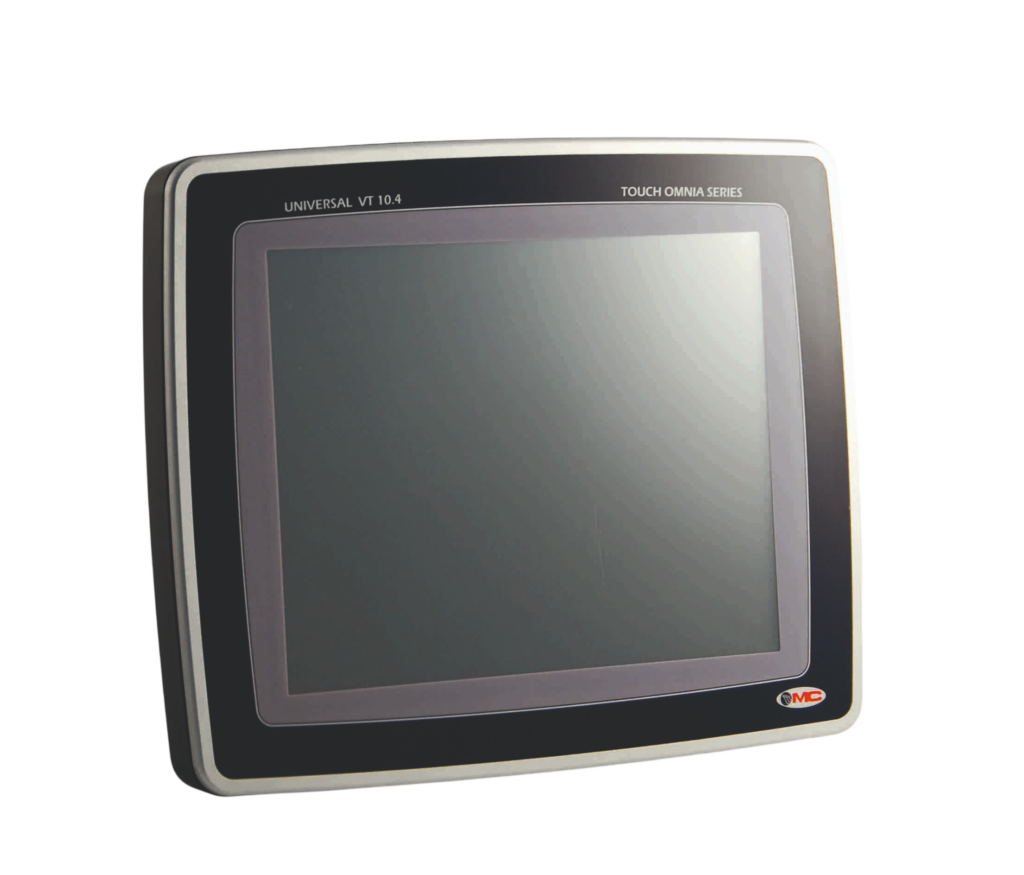
Design and production of customized display frames made of plastic or metal. Made by cnc milling processes from sheet or 3D printing processes in PA12 material.
Finished with aesthetic painting, screen printing, labeling, digital printing. Addition of O-rings or die-cut gaskets, studs and threaded inserts.
Shapes, sizes, and finishes are studied out with the client for a highly customized result.
The frame material is CNC-machined from solid material, generally starting from sheet stock. Materials used: PVC, ABS, aluminum, HIPS (compact polystyrene). Frame for display with central recess: The display surface is visible in this case, and there is a small step between the display and the frame. A single-sided or double-sided adhesive gasket can be placed between the display and the frame to prevent dust or liquids from entering the instrument. Frame for touch display: A precise seat is machined into the frame to house the touch display glass. A die-cut structural adhesive is mounted in this seat for easy assembly. Frame for true-flat display: A recess of about 0.3 mm is machined into the front support for the full-surface application of an anti-reflective polyester film, previously screen-printed and adhesive-backed. This creates a completely flat and seamless front surface, including over the display, which in this case is generally a resistive TFT type.
The project starts with the customer by evaluating the internal dimensions of the electronics and the display. It is also important to assess the product’s intended use in order to choose the most suitable materials and treatments. MCS’s technical department can support the customer with custom design proposals, including the possibility of creating sketches and product renderings using 3D design software.
MCS has an in-house finishing department equipped with polishers, sandblasters, shot-blasting machines, tumblers, and a spray-painting booth. MCS display and monitor frames can be painted with various finishes and colors, including custom samples. The references normally used for painting are RAL, NCS, and Master Chroma. Aluminum display frames can undergo galvanic treatments such as passivation, anodizing, and chrome plating.
Recesses can be machined into MCS frames for the application of labels or membrane keypads.
Graphic customizations can also be applied directly to the support, using screen-printing or digital printing processes.
Rear cover shells can be made from plastic or metal material. The construction methods are similar to those used for a custom enclosure. The shell can therefore be made from simple bent material, plastic fabrication, boxed sheet metal, or thermoformed plastic material. The construction methods and finishes are generally chosen based on whether the rear part remains visible or is built in and hidden.
MCS exclusively manufactures customized products. Therefore, what is published on the site cannot be classified as a standard product and no product can be sold individually. The publication is purely for illustrative purposes. The products are owned by their respective customers and are not directly replicable for different recipients.
Looking for a reliable supplier who can offer you a wide range of products and services in a coordinated and effective way?
How often are you forced to make realize to various suppliers about several parts of the same product, taking charge of the management and synchronization of the different suppliers who often do not respond on the same time and involve delays compared to your schedule?
Electronics enclosures made with 3D printing are structures designed to house and protect electronic circuits, PCB boards, control interfaces, and other components. 3D printing also enables the production of precision mechanical parts, brackets, housings, and customized structural components.
Common synonyms for these products include:
Electronic enclosures are structures designed to house and protect electronic circuits, PCB boards, control interfaces, and other electronic components. They can vary in shape, size, and materials depending on the application.
Common synonyms used to identify these products include:
Our company designs and manufactures customized containers for every need, using different production technologies to guarantee tailor-made solutions.
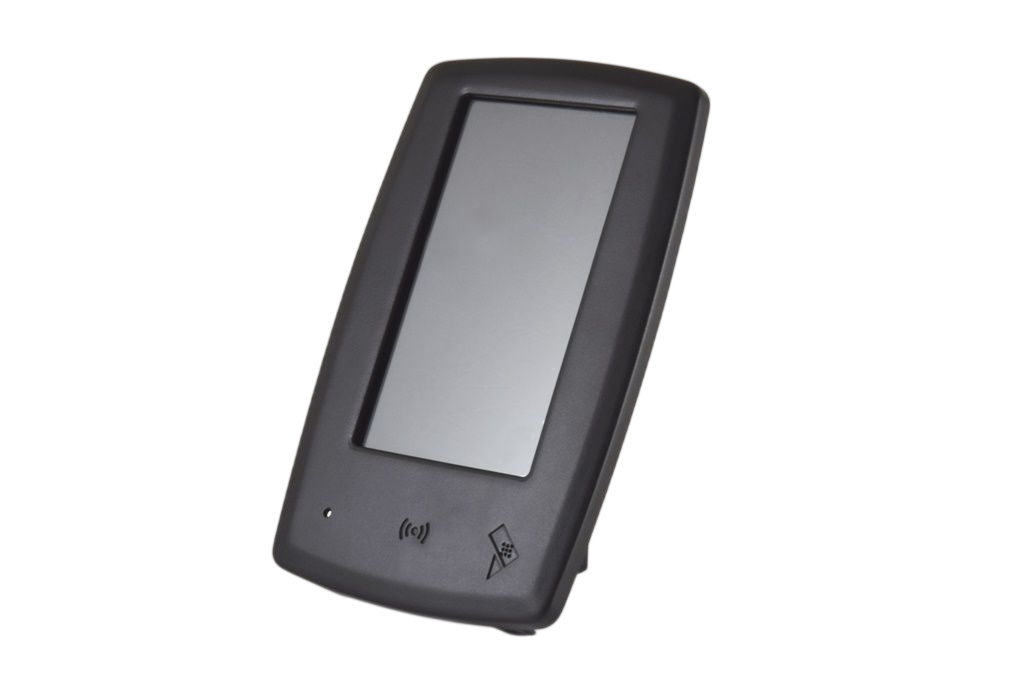
Display frames are structural elements designed to frame and protect screens of electronic devices, such as industrial displays, touchscreens, human-machine interfaces (HMI), and control panels. In addition to providing physical protection for the display, they enhance the product’s aesthetics and facilitate mounting in electronic systems.
A display frame is often also identified as an “electronics enclosure.” Sometimes, the product consists of a frame and brackets/support elements for the display and electronics, while in other cases, the object also includes rear covers such as casings and panels to protect electronic boards.
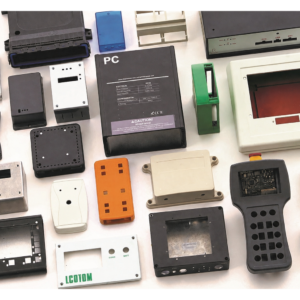
Commercial electronics enclosures are standard casings produced by various international manufacturers in plastic, aluminium, or metal. They are available in catalogues and typically always in stock in a wide range of geometries and sizes.
They are designed for general use in electronic instrumentation and can be adapted to various industries thanks to customization options.
Advantages of commercial electronics enclosures
Disadvantages of commercial electronics enclosures
These containers represent a flexible and affordable solution, particularly suitable for companies that want a reliable and well-made product, without having to invest in totally custom development.
Membrane keyboards/switches are input devices composed of layers of flexible material. They use an electrical contact mechanism to transmit commands when keys are pressed, making them ideal for industrial and electronic applications.